Entryway matting and wet-weather season: the cheapest floor protection you can buy
Most Northeast Alabama buildings have about a third of the matting they need. Here's how a proper entry system pays for itself.
 Summarize with ChatGPT
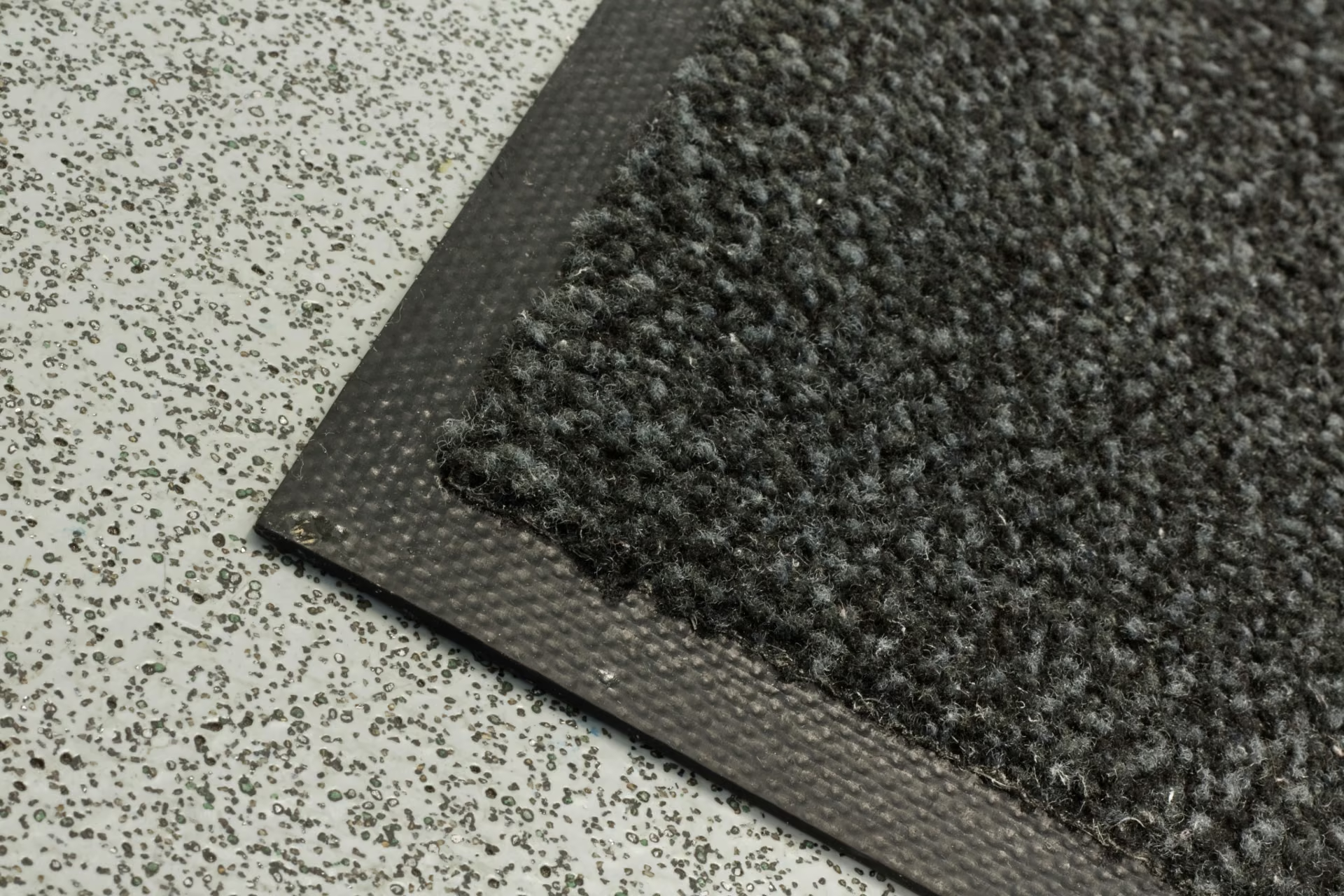
The least expensive floor-care decision a business can make is putting ten to fifteen feet of quality walk-off matting inside every entrance. Matting captures the dirt, grit, and moisture on shoes before they reach your floors, and since tracked-in soil is what wears out finish, stains carpet, and creates slip hazards, a good matting system quietly extends the life of everything behind it. Most Northeast Alabama buildings have about a third of the matting they need.
This is a short post about an unglamorous subject that saves more money per dollar than anything else we do. Here's how it works and how to get it right before the wet season does its worst.
Why is matting such a big deal?
Because nearly all of the soil in your building walks in on shoes, and stopping it at the door is many times cheaper than removing it from 10,000 square feet of floor and carpet afterward.
Think about what a shoe carries into a Gadsden or Anniston lobby on a rainy January morning: water, red clay mud, and sandy grit. The water creates an immediate slip hazard on hard floors. The clay stains carpet and grout, as we covered in our post on what Alabama's climate does to floors. And the grit, the invisible one, grinds away floor finish and LVT wear layers with every step, which is why traffic lanes always fail first and why floors near unprotected entrances need refinishing years early. It's why matting is the first line item in our floor care program, not an afterthought.
Every one of those problems is cheaper to solve at the doormat than anywhere else in the building.
How much matting do you actually need?
The standard most facilities miss: enough matting for several full footsteps per foot, which in practice means ten to fifteen feet of walk-off surface at each entry, and more at high-traffic doors. The common three-foot rug at the door captures roughly one step. It's a gesture, not a system.
A proper entry system works in stages. Outside the door, a scraper mat with an aggressive surface knocks off the heavy mud and debris. Just inside, a scraper-wiper mat pulls off finer grit and starts absorbing moisture. Beyond that, a wiper mat finishes drying the shoe. That last stage matters most at retail and storefront entrances, where foot traffic never really stops. By the last step of matting, the shoe should be leaving nothing behind. During Alabama's rainy stretches, from late-fall rains through winter and into spring storm season, extending the interior run even further pays for itself in mopping labor alone.
Placement details matter too: mats should lie flat with no curled corners (a trip hazard that undoes the safety benefit), cover the full width of the doorway, and sit on both public and employee entrances. The back door where your staff tracks in from the parking lot is usually the dirtiest entry in the building and the least protected.
Why do mats fail, and whose job is the maintenance?
A mat only works until it's full. Saturated with water or packed with grit, a mat stops capturing soil and starts dispensing it, and a soaked mat in a humid Alabama building will sour and smell within days. That's why matting is a maintenance program rather than a purchase: mats need daily vacuuming or sweeping, regular deep cleaning or laundering, rotation so wet mats can dry, and replacement when the fibers pack down for good.
This is exactly the kind of daily discipline that belongs in a janitorial scope of work, and at Sweepers it's built into ours. Our crews police and vacuum entry mats every visit, flag mats that are past their useful life, and treat the entry zone as the first line of the floor-care program rather than an afterthought, right alongside our VCT, LVT and polished concrete care programs and our strip and wax scheduling. When a client asks why their floor finish is lasting longer than it used to, the answer is often lying in front of the door.
Frequently asked questions
Should we buy mats or rent them from a service?+
Both work. Rental services swap mats on a schedule, which suits wet season well; purchased mats cost less over time if someone maintains them. The wrong answer is buying mats and forgetting them.
Do mats really affect slip-and-fall risk?+
Substantially. Most entry-area slips involve wet hard flooring, and a matting run long enough to dry shoes is the primary defense, along with prompt attention to tracked water beyond the mats.
How long do commercial entry mats last?+
Quality mats with real maintenance typically give a few years of service. Packed, flattened, or curling mats are done regardless of age.
Can Sweepers evaluate our entryways?+
Gladly, and we do it as part of every floor-care walkthrough. Five minutes at your doors usually explains the condition of everything behind them.
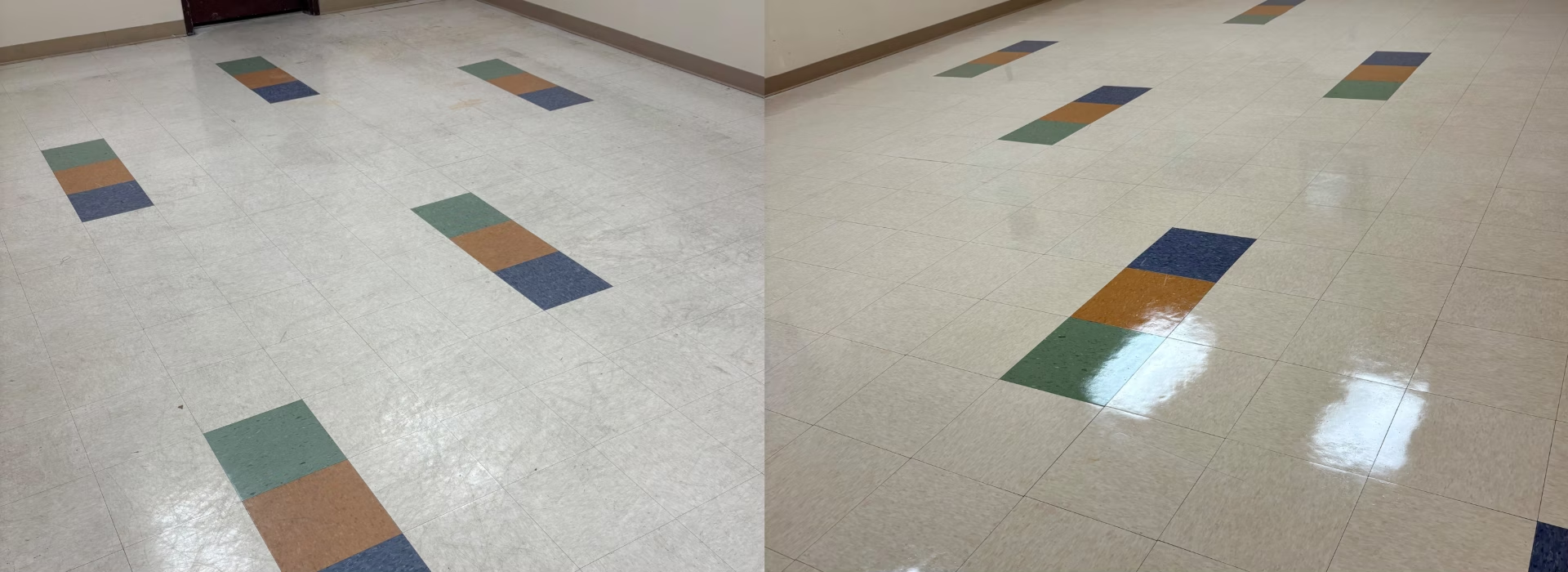
5 signs your floors need professional refinishing
Commercial floors rarely fail overnight. They give you warning signs first, and catching them early is the difference between a simple refinish and a costly replacement.
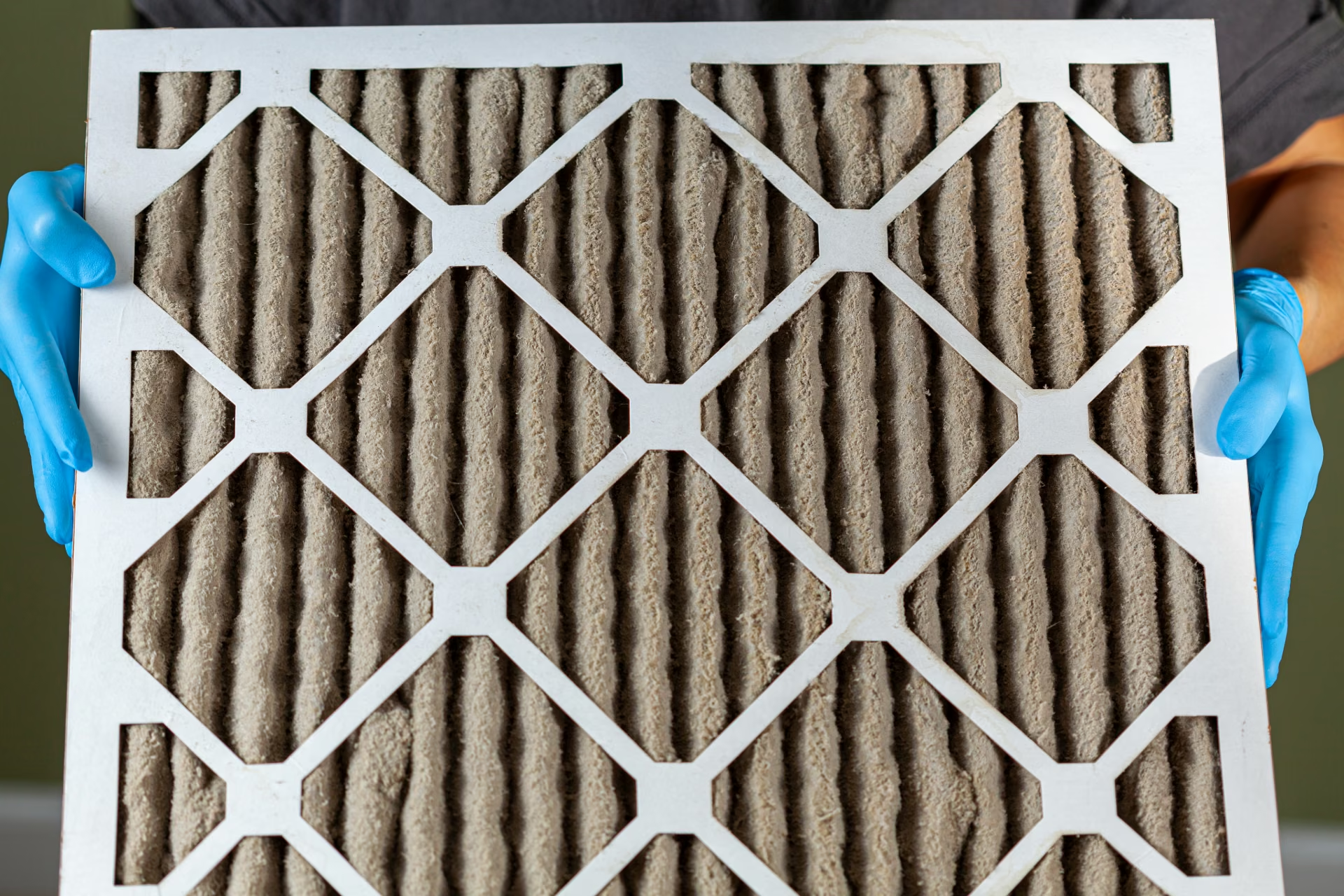
How Alabama humidity, pollen, and red clay destroy commercial floors (and what to do about it)
A floor maintenance plan written for Phoenix or Minneapolis doesn't fit here. Ours does, because we fight red clay, pollen and humidity all year.
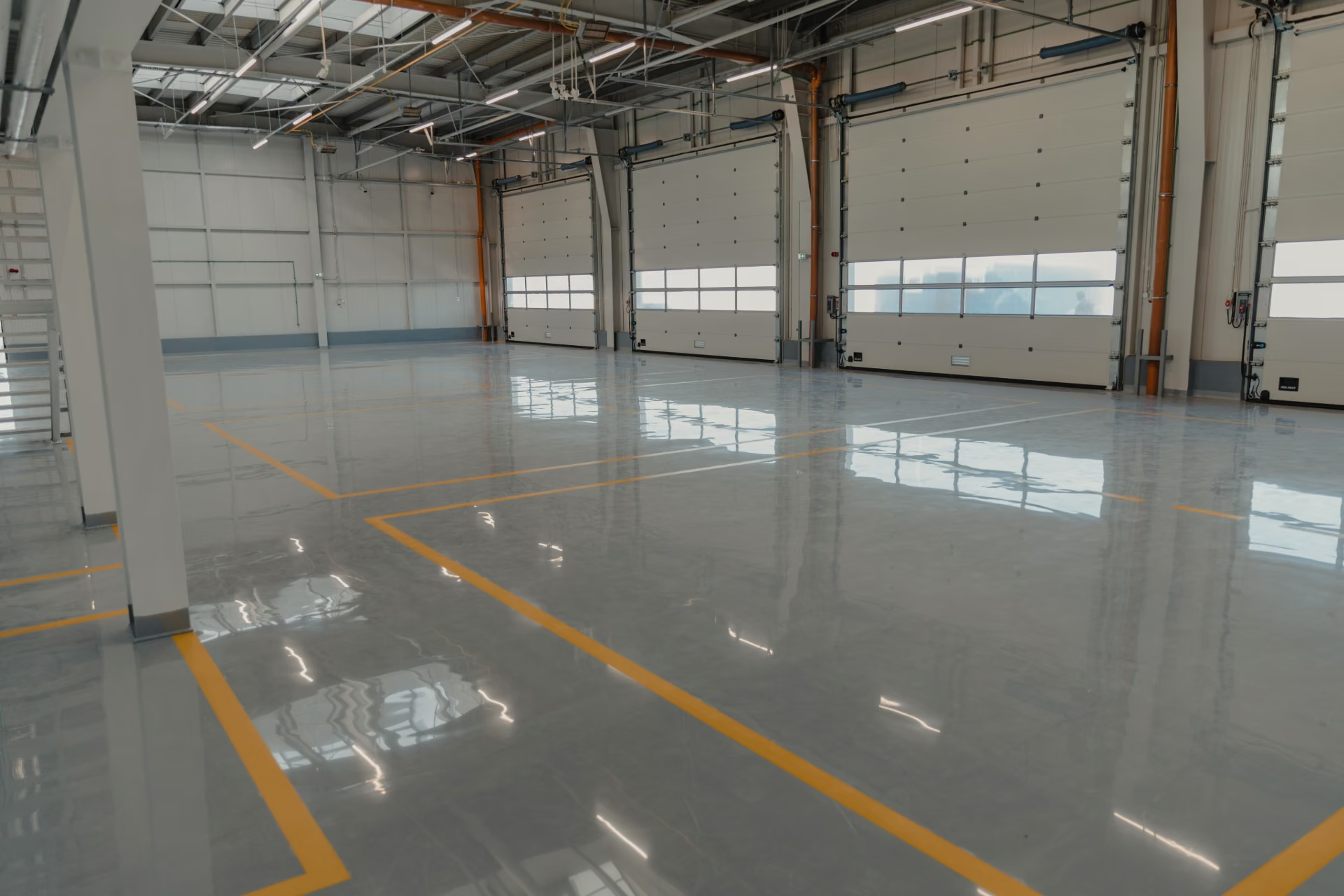
How often should commercial floors be stripped and waxed?
Floor finish doesn't wear out on a calendar. It wears out under feet, grit, and neglect. Here's how to find your building's real schedule.