Housekeeping standards for Alabama manufacturing plants
On a production floor, cleanliness is not about appearance, it is about safety, efficiency and compliance. Here's what a real standard actually covers.
 Summarize with ChatGPT
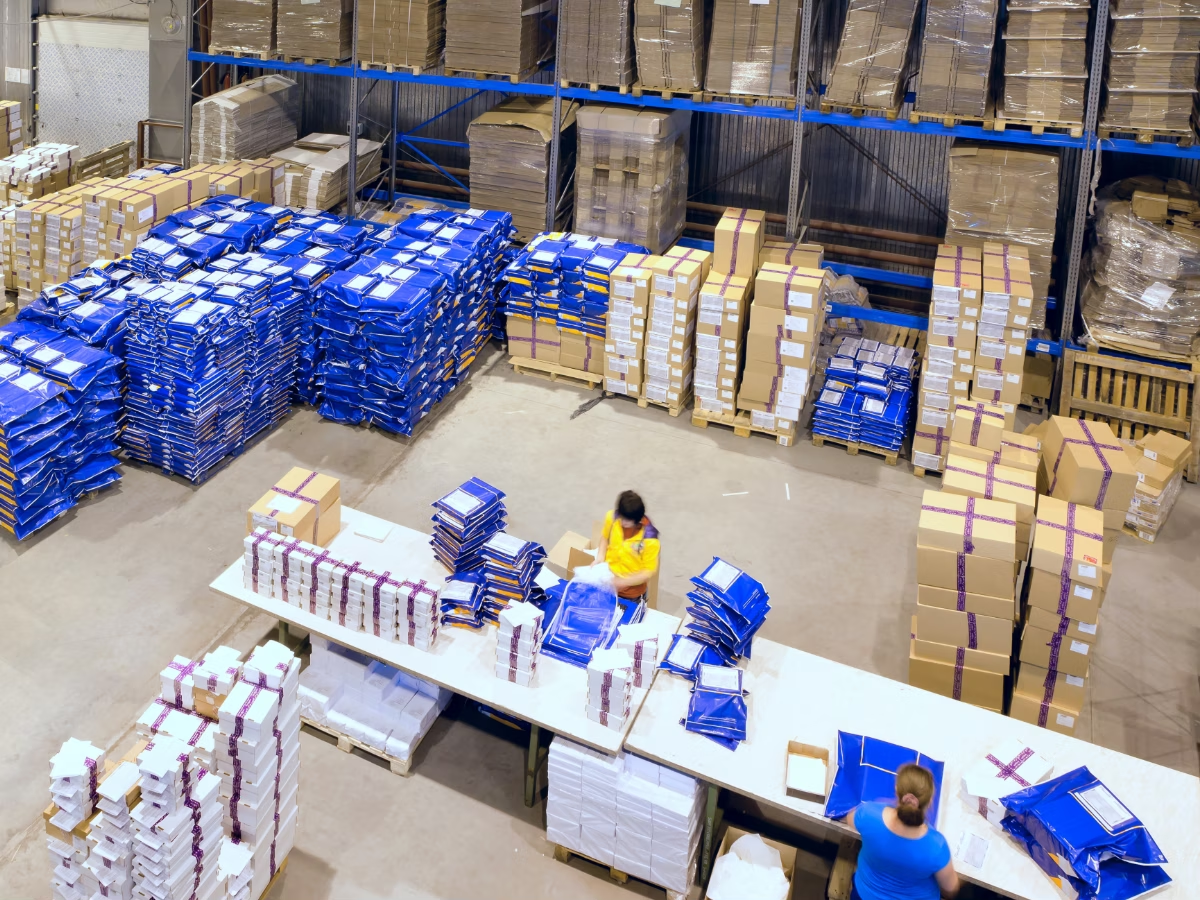
Industrial facilities and manufacturing plants present cleaning challenges that go far beyond a typical office. Fine dust from production, grease and oil from machinery, debris from shipping and receiving, these are not problems a standard janitorial routine is built to handle. In an industrial setting, cleanliness is tied directly to safety, efficiency and compliance. Here's what a real housekeeping standard should actually cover, whether you're evaluating your current vendor or writing the standard yourself. It's the standard behind every manufacturing and warehouse facility we service.
What a real standard covers
- Production area cleaning. Careful work around machinery and assembly lines, including high-dusting of rafters, pipes and ventilation ducts so particles never fall into production, plus sweeping and vacuuming around equipment bases with industrial vacuums and sweepers.
- Warehouse and storage areas. Clearing packing materials, shrink wrap and pallet chips, scrubbing aisles free of dust and spills, scheduled high-shelf dusting, and keeping loading docks clear of oils and debris for forklift safety.
- Employee common areas. The same detailed standard applied to office-grade cleaning, extended to front offices, break rooms, restrooms and locker rooms that see heavy industrial use.
- Floor scrubbing and degreasing. Powerful floor machines with the right brushes and degreasers to lift grime, oil and tire marks from concrete and epoxy floors, cutting slip hazards in the process.
- Waste disposal and recycling. Routine waste removal and liner changes, plus support for cardboard, scrap and plastic recycling protocols, consolidated neatly at designated points.
Safety has to be built in, not bolted on
Cleaning an industrial facility safely is non-negotiable. Crews should be trained on the hazards present in these settings and follow OSHA hazard-communication guidelines, using proper PPE, gloves, safety glasses, hard hats, high-visibility vests or steel-toe boots, as the site requires. Where needed, that means attending site-specific safety orientations and complying with internal rules, including lockout/tagout and permit-required areas.
A standard also has to account for how cleaning interacts with active operations: trained personnel for any high work, clear warning signage and barriers around cleaning zones, and never interfering with active machinery. Scheduling cleaning during downtime or maintenance shutdowns keeps cleaning and production cleanly separated.
If a plant follows specific requirements, food-safe sanitation, FDA or USDA guidelines, or FOD control in aerospace, those requirements have to be built into the cleaning regimen itself, using approved chemicals and documented procedures. That protocol is the backbone of our facility sanitizing service. A housekeeping standard that ignores compliance requirements isn't a real standard.
The standard should match the operation, not a template
Every facility has its own workflow, critical areas and challenges, so a real standard starts by identifying the actual pain points: Is dust affecting product quality? Are there ISO or OSHA cleanliness requirements? Which zones need deep cleaning versus light maintenance?
Scheduling is central to any standard that works in practice. Facilities running second or third shifts, or that can only be cleaned when production stops, need 24/7 availability built into the plan: overnight janitorial, intensive cleaning during a monthly maintenance outage, or quarterly top-to-bottom deep cleans with pressure washing and light-fixture cleaning. A standard that ignores shift patterns will always be fighting the schedule instead of working with it.
Why the standard matters beyond appearance
Removing dust and contaminants helps prevent machinery problems and product rejections. Clear, dry floors reduce accidents. A well-kept environment lifts morale for workers doing tough jobs, and a tidy, organized plant impresses the clients, partners and regulators who tour it, a genuine advantage when bidding for contracts or passing supplier evaluations.
In a plant, a clean floor is not housekeeping, it is uptime, safety and quality control all at once.
Frequently asked questions
What does a plant housekeeping standard actually include?+
Production-area cleaning and high-dusting, warehouse and loading-dock upkeep, break rooms and restrooms, heavy-duty floor scrubbing and degreasing, and waste and recycling management, all with industrial-grade equipment.
Can cleaning be scheduled around production shifts?+
Yes, and it should be. Overnight cleaning, maintenance-shutdown windows, and quarterly deep cleans are standard ways to keep cleaning from slowing production.
Does an industrial cleaning crew need safety training?+
Yes. Crews should be trained on OSHA hazard-communication basics, use proper PPE, and follow site-specific rules including lockout/tagout and permit-required areas.
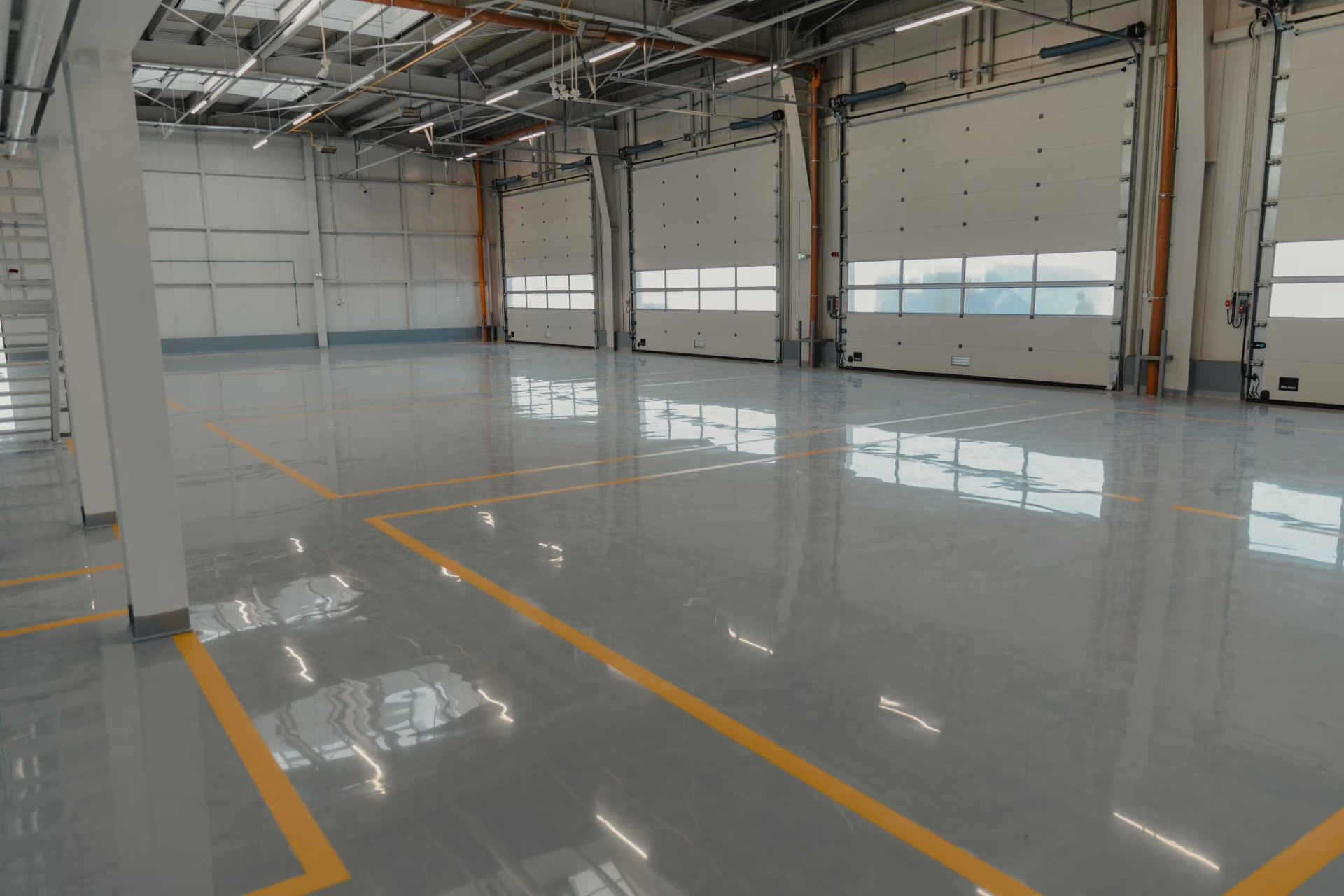
How often should commercial floors be stripped and waxed?
Floor finish doesn't wear out on a calendar. It wears out under feet, grit, and neglect. Here's how to find your building's real schedule.

Choosing a cleaning service in DeKalb County
What to look for, and look out for, when vetting a commercial cleaner for a Fort Payne facility.
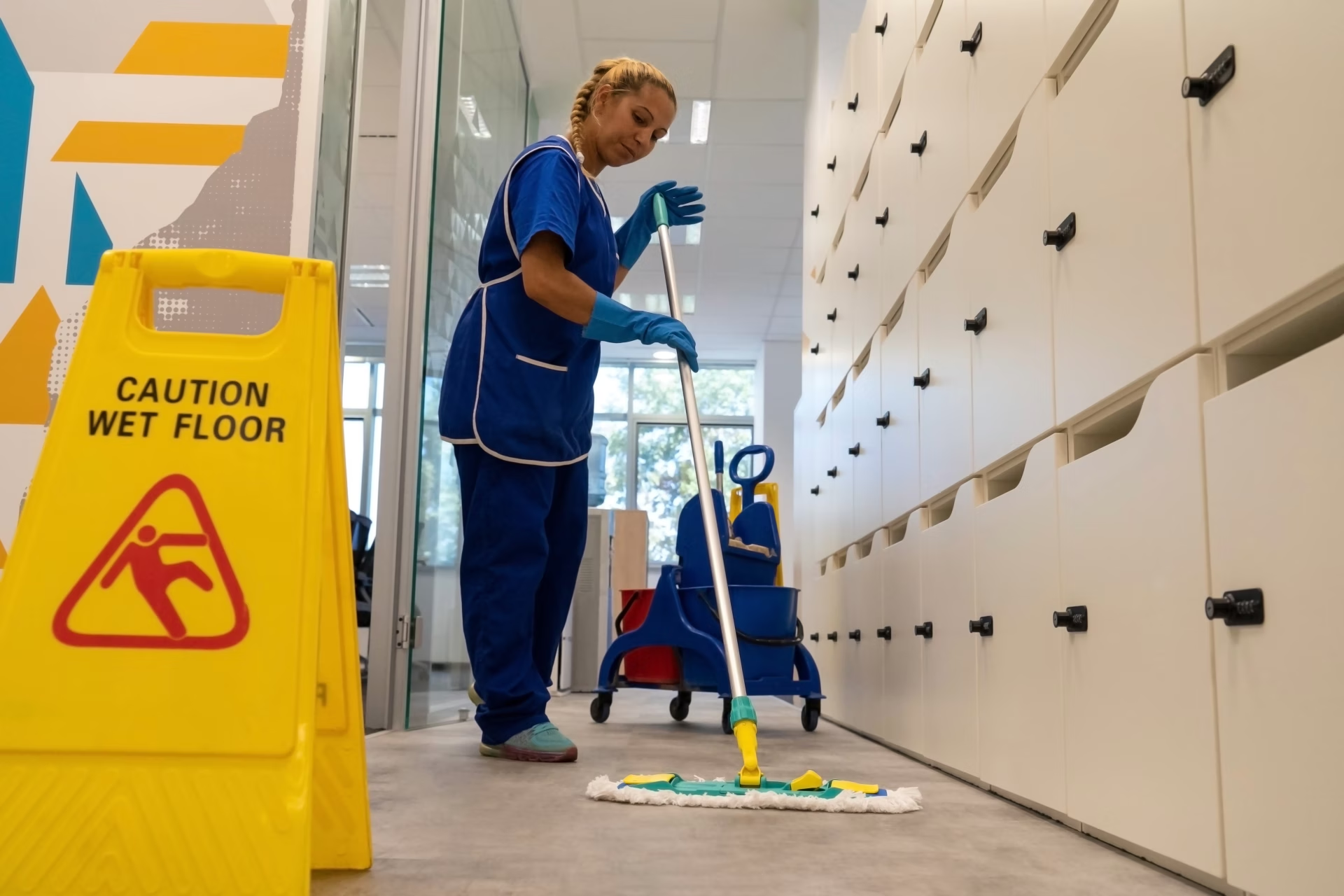
One size doesn't fit all: cleaning built for your industry
A manufacturing plant, a dental office and a church have almost nothing in common when it comes to cleaning. A plan that ignores those differences is a plan that falls short.